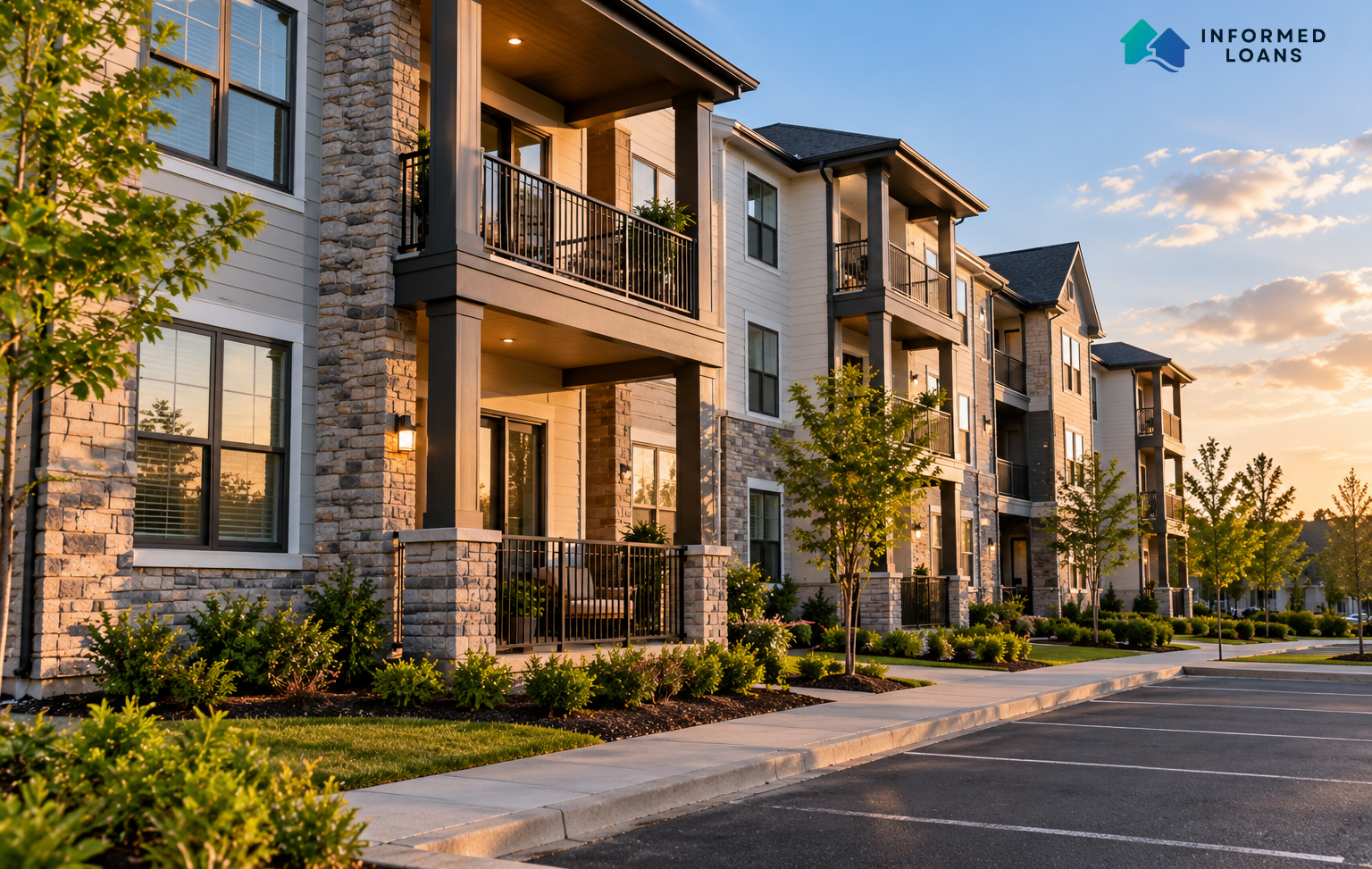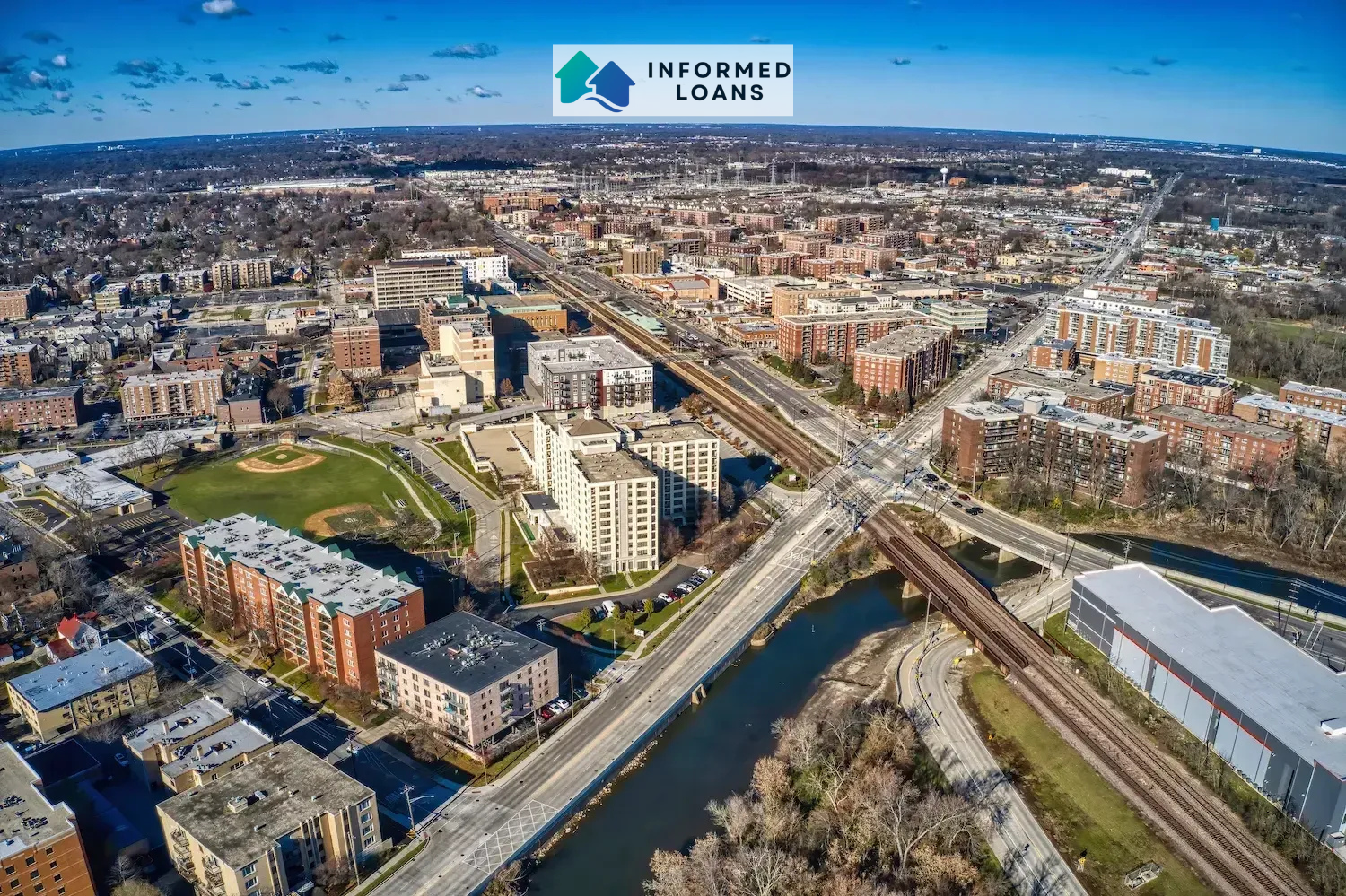
Picking the right spot is a big deal in commercial real estate. A great location can boost your cash flow, attract solid tenants, and help your investment grow over time. Whether you're eyeing a retail space, an office, a warehouse, or a mixed-use building, what's around it can be just as important as the building itself.
If you're looking into investment opportunities and different financing options, where the property is located influences how lenders view your deal. That's why many investors combine thorough market research with flexible funding options like commercial real estate financing or bridge loans when timing is crucial. This guide will show you why location adds value, what to focus on, and how to size up an area before you invest.
National stats back up the importance of location in property performance. The U.S. Census Bureau’s metro and micro area definitions illustrate how local economies often tie into commuting patterns, labor access, and business hubs. Meanwhile, the Bureau of Labor Statistics provides employment data that shows whether a market is expanding or slowing down. In commercial real estate, these signals can mean the difference between a stable income-producing asset and a costly mistake.
Why Location is the Bedrock of Commercial Real Estate
Convenience Drives Tenant Demand
Commercial tenants crave easy access for their customers, employees, vendors, and deliveries. Retail tenants look for visibility, traffic counts, and parking; office users care about commute times and nearby services. Industrial tenants want highway access, efficient shipping, and proximity to labor pools. When an area meets these needs, renting out the property becomes a breeze.
That's why investors often check out both the property and the surrounding area before making an offer. A building with average features can do well in a prime location, while a newer building in a weak area might struggle. If you need a financing option that reflects the property's cash flow, DSCR real estate investment loans can be helpful for assets where tenant demand is tied to a strong location.
Appreciation Follows Economic Strength
Locations with job growth, infrastructure improvements, and a bustling population tend to increase in value faster. Properties near growing business districts or planned mixed-use projects often benefit from rising land values, higher rents, and new consumer traffic. This appreciation usually results from a mix of public investment, private development, and demographic trends.
Mixed-use planning is a great example. Urban revitalization projects that blend residential, retail, office, and recreational spaces can change an area's economic profile. When more people live, work, and spend time in one district, nearby properties often become more desirable, boosting both current income and future resale value.
Current Trends in Commercial Real Estate Site Selection
Urban Revitalization and Mixed-Use Development
Across the nation, cities are promoting mixed-use neighborhoods that create more walkable, active environments. These projects attract tenants who want access to restaurants, transit, and lifestyle amenities without being far from customers or employees. For investors, that means looking beyond the individual parcel and studying how the larger district is changing.
Recent development in Arlington Heights shows this trend. The planned community integrating transit, luxury retail, and residential living is expected to influence surrounding property values and investment interest. Large projects like this can reshape demand patterns and improve the appeal of nearby commercial assets, especially when supported by infrastructure and a strong local tax base.
Transportation Access Grows More Valuable
Properties near major transportation hubs are in-demand because accessibility reduces friction for businesses. Easy access to airports, highways, and main roads can improve logistics, cut delivery times, and expand the labor pool. For industrial and flex properties, transportation can be a decisive advantage.
In suburban markets, this is a major plus. Arlington Heights benefits from being close to O’Hare International Airport and major highways like I-90 and I-294, creating a strategic edge for businesses needing regional reach. This kind of location often strengthens underwriting when investors seek multi-family loans, commercial financing, or acquisition capital for income-generating assets.
Adaptive Reuse and Flexible Layouts
Another trend is the growing interest in properties that can support multiple uses over time. Buildings adaptable for office, retail, medical, storage, or mixed use are often easier to reposition if the market shifts. Flexible spaces help investors minimize risks by broadening their tenant pool.
As e-commerce, hybrid work, and changing consumer habits continue to influence demand, location alone isn't enough. The best markets are those where properties can adapt to market changes. Investors who understand both location quality and adaptability are usually better prepared to handle market cycles, vacancies, and refinancing decisions.
Factors That Make One Area Better than Another
Accessibility and Visibility
Accessibility is crucial because tenants need people to find them easily. Visibility matters because passing traffic can turn into leads, visits, and sales. Corner lots, signalized intersections, and frontage on busy roads often command higher rents because they offer tenants more exposure and convenience.
This is especially true for retail and service businesses. A clinic, restaurant, showroom, or local retailer benefits from being seen and found quickly. Investors who overlook these basics often find that a lower purchase price doesn't always mean a better investment.
Zoning and Future Land Use
Zoning determines what a property can legally be used for, and future land use plans can influence what the area may become. A parcel may look attractive today but face limitations if zoning restricts redevelopment or if the municipality has a different long-term vision for the area. That's why due diligence should go beyond a walk-through and a rent roll.
The American Planning Association emphasizes how land-use planning shapes growth, infrastructure, and community function. For investors, that means checking zoning maps, permit trends, comprehensive plans, and nearby approvals before deciding if a property has future potential. If a location has favorable zoning or realistic redevelopment potential, the investment becomes more resilient.
Demographics and Household Income
The local customer base matters because tenants earn revenue from nearby residents or workers. Strong household income, dense daytime populations, or a growing residential base can support retail and office demand. In industrial markets, the relevant demographic may be workforce availability rather than consumer income, but the principle remains: the surrounding market must support the use.
Investors should study not only population size but also age, employment mix, commuting patterns, and household formation. A growing market with stable income levels can support rent growth and lower vacancy. A shrinking or stagnant market may require stronger concessions, longer lease-up periods, and more conservative underwriting.
Evaluating a Location Before You Invest
Start with the Economic Story
Every strong commercial area has a story, driven by job growth, hospital expansion, public infrastructure, new housing, or a strong local employer base. Before buying, investors should ask what is fueling demand now and what might power it in the future.
Useful data sources include local economic development agencies, census data, labor market information, and business licensing trends. A region with expanding payrolls and improving infrastructure usually offers better long-term support for commercial property than one relying on a single industry. A basic market story can quickly show whether the area is in growth mode or decline mode.
Study Transportation, Traffic, and Flow
Traffic patterns can affect nearly every commercial property type. Retail relies on consumer flow, industrial depends on trucking and distribution, and office relies on commuter convenience. Even within the same neighborhood, one block may outperform another because of signal timing, road design, or access points.
For a more informed view, investors can compare drive times, traffic counts, parking availability, and nearby transit connections. A property that looks less attractive on a map may perform better in practice if it's easier to enter, easier to see, and easier to use. If speed is important, a short-term solution like fix and flip loans or ground-up construction loans may help with repositioning or redevelopment strategies tied to a better location.
Review Competition and Tenant Mix
No property exists in a vacuum. Nearby competitors, complementary businesses, and anchor tenants all shape how well a site performs. A retail asset next to strong anchors may benefit from shared traffic, while a property surrounded by empty buildings may struggle to attract visitors.
Tenant mix also matters. A strong area often supports a balanced mix of service businesses, professional offices, neighborhood retail, and light industrial uses. If the surrounding tenant ecosystem is healthy, your property is more likely to remain relevant even as market conditions change.
Arlington Heights: A Practical Case Study
A Market with Strong Fundamentals
Arlington Heights, Illinois, is a great example of why location matters in commercial real estate. With a population of around 76,005, the market offers a mix of office, retail, and industrial properties and benefits from its strategic position near O’Hare International Airport and major highways. These fundamentals create opportunities for investors seeking both stability and growth.
Market guide data from ROFO’s Arlington Heights commercial market overview shows why this area attracts businesses that value access and community strength. For local investors, the takeaway is simple: a well-located asset in a market with transportation advantages can be more durable than a cheaper asset in a weaker submarket.
Recent Sales Show Strong Demand
Recent transactions also signal investor confidence. In May 2025, Marcus & Millichap facilitated the sale of an 8.34-acre land site in Arlington Heights for $3.35 million, and in June 2025, a 111,667-square-foot flex industrial property in the area sold for $13 million. These deals suggest that well-located assets continue to draw serious interest from buyers who see long-term potential.
Sales activity like this matters because it helps validate the market. When experienced investors are willing to pay for sites with strong access, redevelopment potential, or flexible use, it reinforces the idea that location remains a core driver of value. It also highlights why financing strategies need to match the property’s strengths, especially when a deal depends on speed or a nontraditional profile.
Local Growth Can Influence Financing Options
In active markets, lenders often consider the surrounding area as part of their decision-making. A strong location may help offset moderate building limitations, especially if the tenant base is stable and the market demand supports the use. That's where specialized lending can benefit investors who need to move quickly.
If a property has high income, steady occupancy, or a compelling redevelopment story, programs like NON-QM investment loans or equity-only real estate loans may offer a more flexible path than traditional financing. Location is still crucial, but the right loan can help you capitalize on it before another buyer does.
How Location Affects Different Property Types
Retail Properties
Retail real estate heavily relies on customer traffic, visibility, and convenience. A retail center in a high-traffic area with strong anchors and easy access can do much better than one tucked away in a low-visibility spot. Even small differences in location can have a big impact on rent, occupancy, and tenant turnover.
Retail investors should analyze daily traffic patterns, nearby residential density, and consumer spending power. They should also look for signs of neighborhood vitality, such as new restaurants, active public spaces, and regular foot traffic. A retail area with strong social activity often supports better lease-up and stronger renewal rates.
Office Properties
For office users, location is about convenience, professional image, and workforce access. Tenants want locations that make commuting manageable and give clients a good impression. Proximity to highways, transit, restaurants, and services can make a building more competitive.
As hybrid work continues to reshape office demand, the best office locations are those that still offer a reason for employees and visitors to come in. That often means stronger suburban nodes, medical office corridors, or mixed-use districts with amenities nearby. Investors who understand these shifts can position office acquisitions more intelligently.
Industrial and Flex Properties
Industrial buyers often focus on logistics. A warehouse or flex asset near interstates, airports, or distribution corridors can support efficient operations and reduce transport costs. That access can be especially valuable in a region where speed to market matters.
Industrial location also affects labor recruitment and operating efficiency. A building may be physically sound, but if trucks cannot move efficiently or workers cannot get there easily, the asset will be less competitive. For that reason, industrial investors often rank access and circulation just as highly as square footage.
Common Location Mistakes Investors Should Avoid
Chasing Price Instead of Quality
A low purchase price can be tempting, but the cheapest asset isn't always the best deal. Weak locations may require longer lease-up, more concessions, and more capital for tenant improvements or repositioning. Over time, these hidden costs can erase the benefit of the lower purchase price.
Investors should think in terms of total return, not just acquisition cost. If a stronger area offers better occupancy, lower churn, and more upside, it may outperform a cheaper property in a poor location. Location quality is often a form of risk management.
Ignoring Future Development Around the Site
Nearby construction can either help or hurt a property, depending on what's being built. New infrastructure, transit, or mixed-use development can increase desirability, while incompatible uses may reduce appeal. Investors need to study not only what exists today but also what's likely to be built next.
The best way to reduce surprises is to review municipal plans, permit activity, and zoning changes early in the process. A property that looks stable today may be transformed by future improvements in the surrounding area. That's why location analysis should always include a forward-looking component.
Failing to Match the Area to the Business Plan
Different strategies require different kinds of locations. A value-add retail play needs traffic and visibility, while a warehouse strategy may prioritize access and utility. A multi-family acquisition may depend on neighborhood stability and renter demand, while a redevelopment project may need zoning flexibility.
If the location doesn't support the strategy, the investment becomes harder to execute. Matching the site to the business plan is one of the most important parts of commercial real estate underwriting. Investors who get this right improve their odds before the first loan payment is ever due.
Practical Steps Before You Buy
Build a Location Scorecard
One of the simplest ways to evaluate a commercial site is to create a scorecard. Rate the property on access, visibility, zoning, tenant demand, competition, infrastructure, and future development potential. A structured scorecard helps you compare multiple deals without relying only on instinct.
Include both hard data and soft observations. Hard data might include traffic counts, rent comps, and vacancy rates, while soft observations might include neighborhood activity, cleanliness, and signs of reinvestment. Over time, this process helps investors identify which types of areas consistently perform best.
Work with Local Professionals
Commercial real estate is local, and local knowledge matters. Brokers, appraisers, contractors, attorneys, and lenders can all provide insight into a neighborhood’s strengths and weaknesses. These perspectives often reveal issues that don't show up in a spreadsheet.
Working with an experienced financing partner can also save time. If your deal depends on a quick closing or flexible underwriting, SFR, condo, and 2–4 unit investment financing or a short-term solution may help bridge the gap while you reposition the asset or prepare for permanent financing.
Stress-Test Your Exit Strategy
Before you buy, ask how you will exit if the market changes. Could you sell the property, refinance it, or hold it through a downturn? A strong location improves your options because it usually makes the asset more attractive to a wider group of buyers and lenders.
Stress-testing is especially important when buying in transitional areas. If the market improves, great. If it doesn't, the property should still make sense under conservative assumptions. That discipline protects your capital and gives you more confidence in the long run.
Takeaways for Commercial Real Estate Investors
Location is the First Filter
When evaluating a commercial property, location should be one of the first questions you answer, not one of the last. A strong building in a weak area often underperforms, while a solid location can lift an average asset. The best investors use location to shape acquisition, financing, and exit strategy from the beginning.
That's why understanding local market trends, transportation access, zoning, and development momentum is so important. The right area can strengthen tenant demand, support rent growth, and reduce risk across the hold period. It can also improve your leverage with lenders and future buyers.
Combine Market Insight with Flexible Financing
Location analysis becomes even more powerful when paired with the right capital structure. Whether you need fast funding for acquisition, cash-out support for a repositioning, or a nontraditional loan for a strong deal, the financing should fit the asset and the business plan. Flexible lending can help you act when opportunity appears.
At Informed Loans, we help investors evaluate commercial opportunities with practical lending solutions designed for real-world deals. If you are considering your next purchase, renovation, or redevelopment, explore commercial real estate financing, bridge loans, and ground-up construction loans to see how the right funding can support the right location.
Take the Next Step with Confidence
If you want stronger investment outcomes, start by focusing on the area, not just the building. Study the data, walk the neighborhood, review the zoning, and compare your options carefully. A disciplined location strategy can help you find better tenants, reduce vacancy, and build a portfolio that performs through changing market cycles.
For more guidance on commercial and hard money lending strategies, visit Informed Loans or contact our team to discuss your next property. The right area can create opportunity, but the right financing can help you capture it.
Frequently Asked Questions about Location in Commercial Real Estate
What Makes a Commercial Location Good?
A good commercial location usually combines accessibility, visibility, stable demand, favorable zoning, and long-term growth potential. The exact mix depends on the property type, but strong infrastructure and tenant support are common across most successful investments. The best locations reduce friction for the business operating there.
How Much Does Location Affect Property Value?
Location can affect both current income and resale value in a major way. Two properties with similar square footage can perform very differently if one sits in a thriving corridor and the other sits in a declining one. Location influences rent potential, vacancy risk, and buyer demand at exit.
Should I Buy in an Up-and-Coming Area?
Up-and-coming areas can offer strong upside, but they also require more caution. Investors should verify whether development is real, supported by public investment, and likely to continue. If the story is credible and the downside is manageable, those areas can be attractive for long-term growth.
How Do Lenders Look at Location?
Lenders consider location because it affects marketability, occupancy, and resale value. A strong area can make a deal easier to finance, while a weak area may require more equity, stronger cash flow, or a more flexible loan structure. That's one reason location analysis should be part of every financing conversation.
What is the Best First Step When Evaluating a Site?
Start with the local market story. Understand what is driving demand, what the competition looks like, and whether the site fits your intended use. Once the market makes sense, move into zoning, traffic, demographics, and financing options.
If you're ready to explore commercial real estate opportunities with a location-first approach, connect with Informed Loans today and let our team help you evaluate the right property, the right market, and the right loan strategy for your next move.