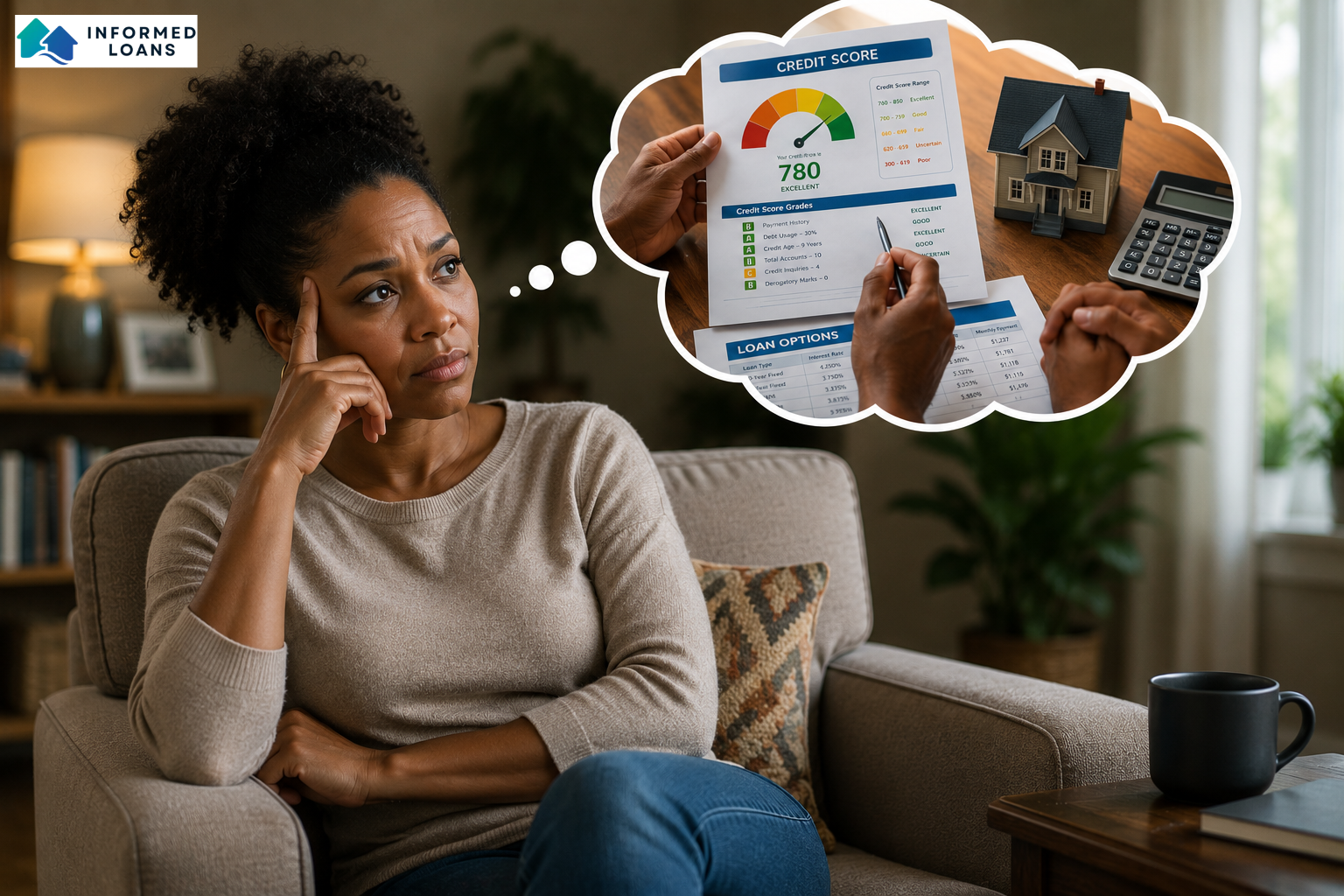
Introduction: Why Credit Score Still Shapes Borrowing Power in 2026
Your credit score can influence almost every part of the lending process, from whether you qualify to how much you pay over the life of the loan. In 2026, that relationship will have become even more important because lenders are using updated scoring models and more recent payment behavior to make decisions. If you are comparing mortgage options, personal financing, or investment funding, understanding how lenders read your score can help you make smarter choices and avoid costly surprises.
For borrowers who want flexibility, it also helps to know that not every loan depends on the same underwriting rules. In commercial and investor financing, programs like DSCR Real Estate Investment Loans and NON-QM Investment Loans may look beyond traditional income documentation and focus more on property performance or alternative qualification factors. That makes credit score important, but not always in the same way it is for conventional consumer lending.
According to the Consumer Financial Protection Bureau, your credit history is one of the core elements lenders review when determining risk and pricing. You can learn more about how credit reports work from the CFPB here: credit reports and scores. In this guide, we will break down credit score ranges, explain how lenders use them, share current 2026 trends, and show you practical ways to improve your loan options.
How Lenders Use Credit Scores to Decide Loan Terms
Credit score as a risk signal
Lenders use credit scores to estimate the likelihood that a borrower will repay on time. A higher score usually suggests stronger payment habits, lower default risk, and more predictable financial behavior. That often translates into better interest rates, lower fees, larger loan amounts, and more flexible approval terms.
A lower score does not automatically mean rejection, but it usually means the lender will price the loan more conservatively. That may include a higher rate, a larger down payment, stricter reserve requirements, shorter repayment terms, or more collateral. The key idea is simple: the stronger your credit profile, the more negotiating power you usually have.
Credit score and pricing are linked.
Interest rates are often where the effect of credit becomes most visible. Even a difference of 50 to 100 score points can create a meaningful difference in monthly payments and total interest. Over a 15- or 30-year mortgage, that can amount to thousands or even tens of thousands of dollars.
This is why borrowing strategy matters. For some borrowers, it makes sense to improve credit first before applying. For others, especially investors who need speed, short-term options such as Bridge Loans or Fix and Flip Loans may create opportunities even when traditional financing is not ideal. The right option depends on the property, timeline, and exit strategy.
The 2026 Credit Score Models and Why They Matter
FICO 10T and VantageScore 4.0 are changing the game
One of the biggest developments in 2026 is the broader adoption of newer credit scoring models such as FICO 10T and VantageScore 4.0. These models look at 24 months of payment behavior, which means recent trends matter more than they used to. Consistent on-time payments can help you more quickly, while recent negative patterns may weigh more heavily.
This shift is significant because borrowers are no longer judged only by older, static snapshots of credit. Instead, lenders may have a more dynamic picture of how someone manages revolving debt and installment obligations over time. For borrowers who have recently improved their habits, that is encouraging. For anyone carrying late payments or high utilization, it is a reminder that recent behavior counts.
Lower minimum score requirements can expand access
The Federal Housing Finance Agency has also reduced the minimum credit score for some conventional mortgage pathways, which may broaden access to homeownership. That does not mean lending standards disappeared. It simply means some qualified borrowers with lower scores may now have more ways to enter the market than in the past.
The FHFA publishes policy updates and housing finance information that help explain these shifts. For more background, see the agency’s site here: Federal Housing Finance Agency. The broader lesson is that credit score thresholds are not fixed forever, and staying informed can help you time your application more effectively.
Credit Score Ranges and What They Typically Mean
Excellent credit: 740 to 850
Borrowers in the excellent range usually qualify for the best rates, the widest selection of loan programs, and the strongest terms. Lenders tend to view these applicants as dependable and low risk. That does not guarantee approval, but it often creates more room to compare offers and negotiate terms.
In practical terms, excellent credit can be especially valuable on large loans. A small rate difference on a mortgage, commercial property, or investment loan can create a substantial cost advantage. For borrowers with strong credit, it can also be easier to access premium programs with less friction and fewer conditions.
Good credit: 670 to 739
This is a solid borrowing range for many consumers. Most lenders will offer competitive options, and rates may still be favorable depending on debt-to-income ratio, down payment, property type, and income stability. Many borrowers fall into this band, which often provides a good balance between access and affordability.
Even in the good range, shopping around still matters. Two lenders can look at the same score and produce very different offers based on overlays, debt structure, or property type. Comparing offers is one of the easiest ways to reduce borrowing costs, especially when combined with a careful review of APR and fees. Our related guide on how to compare loan offers can help you evaluate the fine print.
Fair credit and below: 580 to 669 and under 580
Borrowers in the fair range may still qualify for financing, but the options are usually more limited and expensive. Under 580, approval becomes more difficult with traditional lenders, especially for unsecured loans. Some lenders may require stronger collateral, larger down payments, co-borrowers, or tighter documentation.
That is where alternative lending can become useful. In the commercial and investor space, lenders may prioritize property value, cash flow, or project viability over a personal score alone. Programs like Equity-Only Real Estate Loans can be especially helpful when the asset itself is the main strength of the deal.
What a Credit Score Can Do to Interest Rates and Loan Costs
Small rate differences create large lifetime costs.
Research and lender data consistently show that a credit score can affect pricing far more than many borrowers expect. For example, a borrower with excellent credit may secure a personal loan APR in the 6% to 7% range, while a borrower with fair credit might see rates up to 35.99%, depending on the lender and loan structure. Even modest differences in mortgages can substantially change total interest paid.
Consider a 30-year mortgage. If one borrower locks in 6.5% and another gets 7.5% on the same amount, the monthly difference may seem manageable at first. But over the decades, the higher-rate borrower can pay far more in interest. That is why score improvement before applying can sometimes be one of the highest-return financial moves available.
Why APR matters as much as the headline rate
Interest rate is only one part of the cost picture. APR includes certain fees and gives a better sense of the total borrowing cost. A low rate with high fees may not actually be cheaper than a slightly higher rate with lower closing costs. That is especially true for investment loans, bridge financing, and refinance situations.
If you are comparing financing structures for your next deal, a clear understanding of APR can help you make better decisions. Our guide to APR and loan costs explains how to read offers more accurately. Borrowers who understand APR are usually better positioned to spot hidden costs and choose the right product.
Real-World Examples: How Credit Score Changes Loan Outcomes
Homebuyer scenario
Imagine two buyers applying for a 30-year fixed mortgage. One borrower has a 740 score and secures a 6.5% APR. The other has a 620 score and is offered 7.5% APR. The second borrower may still qualify, but the monthly payment is higher, and the total interest over the life of the loan can rise significantly.
This example highlights why credit preparation matters before home shopping. A better score can improve affordability and may even expand the price range a buyer can consider. For first-time buyers, it is wise to review both score and payment habits before making an offer. Our article on common first-time homebuyer mistakes can help you avoid preventable setbacks.
Auto loan scenario
Now consider an auto loan example. A borrower with a 780 score might obtain a 5.5% APR, while a borrower with a 660 score could receive an 8.0% APR. On a five-year car loan, that difference can change the monthly payment enough to affect the borrower’s budget and long-term financial flexibility.
The lesson is consistent across loan types: your score does not just influence approval. It shapes the entire price of borrowing. In the consumer world, that often means higher monthly obligations. In the investment world, it may affect leverage, reserves, or whether a project is approved at all.
Commercial and hard money example
In commercial and hard money lending, credit is important, but it is not always the primary factor. Lenders often focus on the value of the property, the equity position, the project plan, and the borrower’s ability to exit the loan. This is especially true for short-term financing, where speed and asset quality matter more than strict W-2 documentation.
That is why options like Commercial Real Estate Financing or Ground-Up Construction Loans may still work for borrowers with imperfect credit. The deal can sometimes carry more weight than the score, particularly when the collateral is strong and the plan is realistic.
How to Improve Your Credit Score Before Applying for a Loan
Pay every bill on time.
Payment history remains one of the most influential components of most credit scoring models. Even a few late payments can create a noticeable drag on your score, especially if they are recent. If you want the fastest path to improvement, consistency is your friend.
Setting autopay for minimum balances, using reminders, and aligning due dates with paydays can reduce mistakes. This is a simple but powerful habit. Lenders want to see that you can manage obligations reliably over time.
Keep credit utilization low.
Credit utilization refers to how much of your available revolving credit you are using. Experts often recommend staying below 30%, though lower is generally better if you can manage it. High utilization can signal financial stress even if you never miss a payment.
If possible, pay down balances before submitting a loan application. This can sometimes create a faster score improvement than waiting for new credit activity to age. Borrowers who reduce utilization before applying may see better terms, especially on mortgages, personal loans, and even business-related credit reviews.
Avoid unnecessary hard inquiries.
Too many credit inquiries in a short period can make you look riskier to lenders. A single application usually will not be a major problem, but multiple applications across several products can add up. If you are comparing lenders, be strategic and apply only when you are ready.
Borrowers who know they will seek financing soon should avoid opening unnecessary new accounts. The goal is to present a stable, predictable profile. That can help preserve the score you have worked to build.
Why Credit Is Not the Whole Story in Alternative Lending
Property value and cash flow can outweigh the score.
In alternative lending, especially commercial and investor financing, a strong asset may compensate for weaker credit. Lenders may look at income from the property, equity, after-repair value, or a realistic exit strategy. That means borrowers with lower scores may still have good options if the deal is structured well.
This is one reason DSCR and asset-based programs remain popular with investors. If a property produces enough cash flow to support debt service, the personal score may become only one part of the puzzle. For investors using rental property cash flow, SFR, Condo, and 2–4 Unit Investment Financing can open doors that conventional lenders might leave closed.
Hard money lenders often emphasize speed and collateral
Hard money lending is often used when timing matters more than traditional underwriting. Property value, repair potential, and exit strategy can matter more than a perfect credit profile. A borrower with a lower score may still qualify if the collateral is strong and the project has a clear path forward.
That said, a stronger score can still improve the terms even in hard money lending. You may see better pricing, lower fees, or more flexible leverage. For borrowers looking into this type of financing, our Bridge Loans and Fix and Flip Loans pages explain how speed and structure can matter as much as personal credit.
Local Perspective: What Borrowers in Arlington Heights Should Know
Community lenders may offer more flexibility.
Borrowers in Arlington Heights, IL, may find that local credit unions and community banks provide more personalized lending conversations than large national institutions. These lenders sometimes take a broader view of the borrower’s history, local ties, and relationship banking. That can be especially helpful for people whose financial picture does not fit neatly into standard boxes.
While local lenders may still use credit scores heavily, they may also be more willing to explain exceptions or structure a solution around a borrower’s strengths. That is useful for self-employed borrowers, investors, and business owners who need practical options instead of a rigid decline. Local relationships can matter, especially when timing is tight.
Local financing can help investors act quickly.
Investors in the area often need financing for acquisitions, rehabs, and refinance opportunities that do not wait for slow underwriting. In those cases, flexible programs can be a better fit than trying to force a conventional solution. If you are evaluating larger projects, Multi-Family Loans and specialized commercial lending can be more relevant than consumer-style borrowing.
Local market knowledge also helps lenders assess risk more accurately. A deal in a strong submarket may warrant a different look than a similar property in a weaker one. That is one reason borrowers benefit from working with professionals who understand both the financing and the local market environment.
FAQ: Common Questions About Credit Scores and Loan Options
Can I get a loan with a low credit score?
Yes, many borrowers with low scores still get loans, but the terms are usually less favorable. You may face higher interest rates, shorter repayment periods, stricter documentation, or larger down payment requirements. In some cases, alternative lending or collateral-based financing may be the better route.
Does a higher credit score guarantee approval?
No. Credit score is important, but lenders also look at income, assets, debt load, property condition, and the purpose of the loan. A strong score improves your odds, but it does not erase all other underwriting concerns. A deal still needs to make sense on its own merits.
How fast can I improve my score?
Some borrowers see movement within a month or two after reducing balances or correcting reporting errors. Other improvements take longer, especially if the issue involves late payments or limited credit history. The fastest wins usually come from paying on time, lowering utilization, and avoiding new negative marks.
Are hard money loans easier to get with bad credit?
Often yes, because hard money lenders focus more on collateral than on credit alone. However, the terms may still improve if your score is stronger. A better profile can help reduce risk pricing and open up more favorable structures.
Conclusion: Use Your Credit Score as a Strategy, Not a Mystery
Your credit score affects more than just loan approval. It can influence the types of financing available to you, the rate you pay, the amount you can borrow, and the flexibility of the terms. In 2026, newer credit models and evolving lending standards are making recent behavior even more important, which means good habits can translate into real borrowing advantages.
If you are a homebuyer, improving your score before applying may save you substantial money over time. If you are a real estate investor or business owner, the right alternative loan may let you move forward even if your score is less than perfect. The best approach is to understand your numbers, compare options carefully, and choose a financing strategy that matches your goals.
For guidance on commercial, investor, and hard money solutions, explore Commercial Real Estate Financing or contact Informed Loans to discuss your goals. You can also review related educational resources on loan approval factors to better prepare before you apply. When you understand how a credit score affects loan options, you are in a much stronger position to borrow with confidence.
Ready to evaluate your options? Visit Informed Loans or call (833) 574-1629 to discuss financing strategies that fit your credit profile and your next opportunity.
For additional consumer information about credit scoring and lending, you may also find these authoritative resources useful: Consumer Financial Protection Bureau and USA.gov credit report resources.